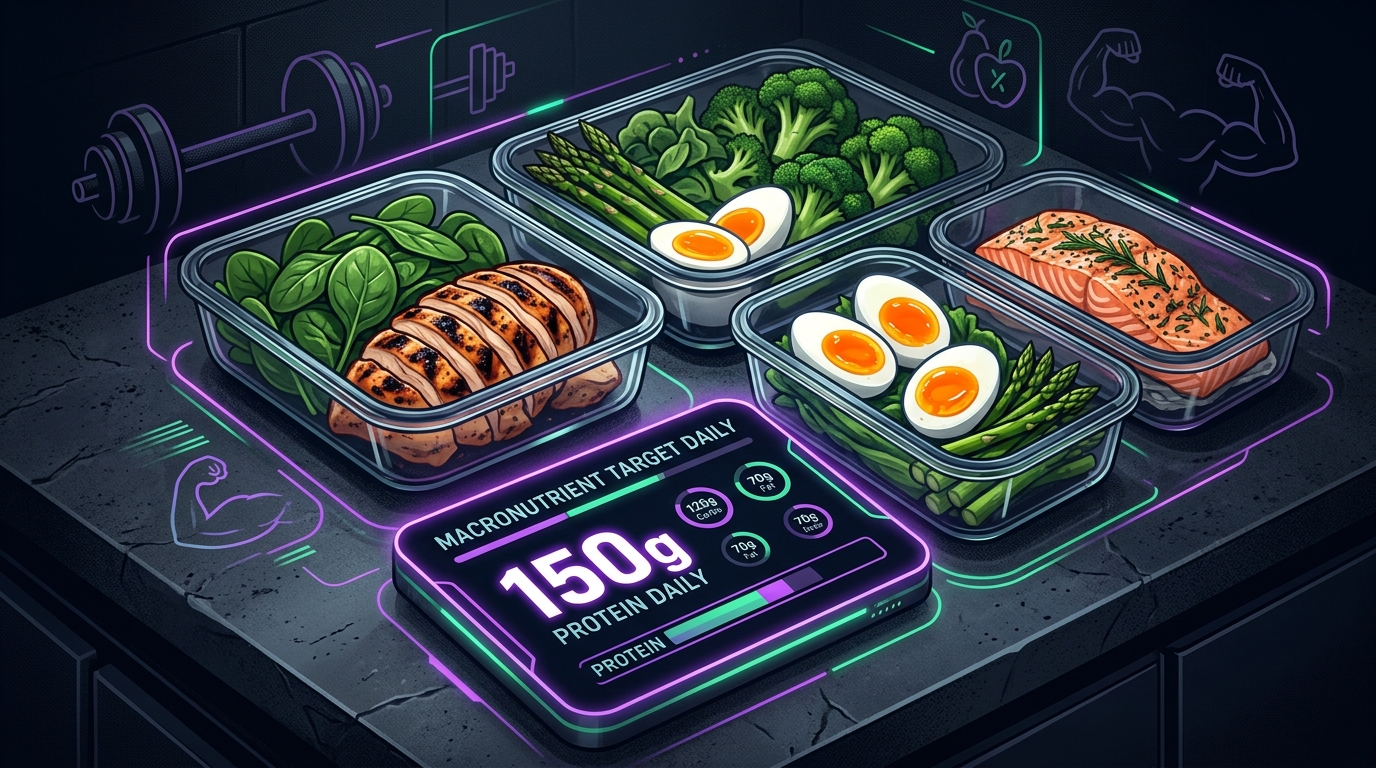
Hitting 150 grams of protein every single day is one of the most effective strategies for preserving lean muscle mass during a calorie deficit. According to position papers published by the International Society of Sports Nutrition (ISSN), consuming 1.6 to 2.2 grams of protein per kilogram of body weight maximizes muscle protein synthesis and accelerates fat oxidation.
However, many people struggle because high-protein meals can feel expensive, repetitive, and time-consuming to cook from scratch every evening. With the right batch-cooking framework, you can prep four days of high-protein, calorie-controlled lunches in under 45 minutes.
Top Affordable High-Protein Grocery Staples
You do not need expensive cuts of steak or specialty powders to hit your goals. Here is how budget staples compare in protein density and cost efficiency:
| Protein Source | Serving Size | Protein Yield | Calories | Cost per 30g Protein |
|---|---|---|---|---|
| Chicken Breast (Boneless) | 170g (6 oz raw) | 38g | 190 kcal | Under $1.20 |
| Non-Fat Plain Greek Yogurt | 250g (1 cup) | 25g | 140 kcal | Under $1.40 |
| Canned Tuna in Water | 1 can (130g drained) | 30g | 130 kcal | Under $1.30 |
| Whole Eggs + Liquid Egg Whites | 2 eggs + 100ml whites | 24g | 190 kcal | Under $1.10 |
| Firm Tofu / Edamame | 200g tofu block | 24g | 170 kcal | Under $1.50 |
| Cottage Cheese (Low-Fat) | 225g (1 cup) | 28g | 160 kcal | Under $1.35 |
The 4-Meal Template to Hit 150g Protein Effortlessly
Rather than trying to consume 80 grams in a single sitting, distribute protein evenly across 3 to 4 meals to sustain satiety and optimize muscle protein synthesis throughout the day:
- Breakfast (35g Protein): 3 scrambled eggs with 100g liquid egg whites, spinach, and a slice of whole-grain toast.
- Lunch (45g Protein): 180g roasted chicken breast or tofu over seasoned brown rice, roasted broccoli, and 1 tbsp light olive oil dressing.
- Afternoon Snack (30g Protein): 250g non-fat Greek yogurt mixed with 1 scoop protein powder or berries and chia seeds.
- Dinner (40g Protein): 170g baked salmon or lean ground turkey with sweet potato mash and asparagus.
The Thermic Advantage of High-Protein Diets
Research documented by the National Center for Biotechnology Information (NCBI) confirms that protein has a thermic effect of food (TEF) of 20 to 30 percent. For every 100 calories of protein you consume, your body expends 20 to 30 calories during digestion, giving you a natural metabolic edge.
Batch Prep Strategy
Sheet-pan cooking is the fastest meal prep method. Season 2 pounds of chicken breast and chopped vegetables across two baking sheets and roast at 400°F (200°C) for 22 minutes for four ready-to-eat lunches.
Track Your Meals and Macros Automatically
Avoid manual calculations and guesswork. Using Calorie Counter Meal Tracker allows you to log meal prep containers by snapping a photo, instantly calculating total protein, carbs, fats, and daily calorie targets.
Daily Calorie Needs & Macronutrient Calculator (TDEE)
Determine your precise Basal Metabolic Rate (BMR), Total Daily Energy Expenditure (TDEE), and target protein/carb/fat grams.
Daily Protein & Leucine Target Calculator
Calculate evidence-based daily protein targets and per-meal leucine thresholds ($2.7 ext{g}+$) to maximize muscle preservation and hypertrophy.
Per-Meal Protein Distribution & Food Sources:
US Navy Body Fat Percentage & Lean Mass Calculator
Calculate clinical body fat percentage, lean body mass (LBM), and fat mass using US Department of Defense circumference formulas.
Resting Metabolic Rate & Inactive Daily Burn Calculator
Calculate how many calories your body expends 24/7 simply breathing, circulating blood, and maintaining vital organs while doing nothing.
Body Mass Index (BMI) & Healthy Weight Calculator
Calculate your clinical Body Mass Index and healthy weight bracket according to World Health Organization (WHO) standards.