The famous target of 10,000 steps per day did not originate from a biomedical research laboratory. It was created in Japan in 1965 as a marketing campaign for a clockmaker selling the Manpo-kei (which translates to '10,000-steps meter').
Yet despite its commercial origins, modern exercise epidemiologists have spent the last decade tracking hundreds of thousands of adults to verify whether 10,000 steps holds genuine clinical power. The research confirmed what ancient physicians always suspected: daily brisk walking is the single most potent, low-impact longevity habit available to humans.
What the Landmark Clinical Studies Actually Found
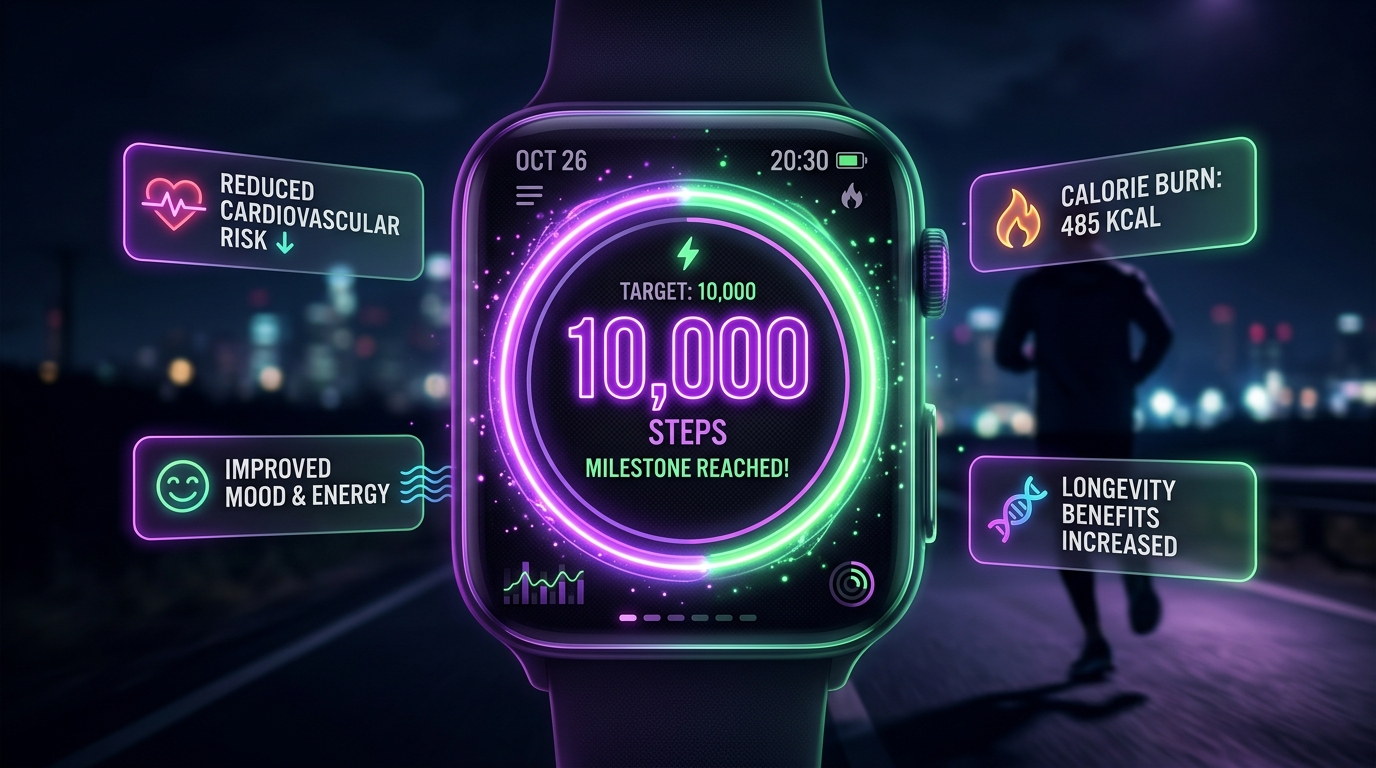
Meta-analyses published in The Lancet Public Health (2022) and JAMA Internal Medicine (2021) examined data from over 47,000 individuals across four continents. The findings revealed a clear dose-response curve for daily walking:
| Daily Step Range | Mortality Risk Reduction | Primary Health Benefits | Who It Applies To |
|---|---|---|---|
| Under 4,000 steps | Baseline (Sedentary) | Higher risk of insulin resistance, sluggish lymphatic drainage | Sedentary desk workers |
| 6,000 to 7,500 steps | 40% lower mortality risk | Substantial cardiovascular protection, lower resting blood pressure | Adults over 60 years old (steepest benefit curve) |
| 8,000 to 10,000 steps | 50% to 65% lower mortality risk | Optimal metabolic clearance, lower visceral adiposity, improved mood | Adults under 60 seeking maximum longevity and fat loss |
| 12,000+ steps | Plateau effect | Additional calorie expenditure for athletic conditioning | Active runners, athletes, manual workers |
The Biological Power of Non-Exercise Activity (NEAT)
Going to the gym for 45 minutes burns approximately 250 to 350 calories. In contrast, accumulating 10,000 steps throughout the day accounts for Non-Exercise Activity Thermogenesis (NEAT), burning 400 to 600 calories while keeping lipoprotein lipase active in your muscle tissue to clear triglycerides from your bloodstream all day long.
Why Social Leagues Make Daily Walking Addictive
Tracking steps alone in a silent app frequently leads to drop-off after three weeks. Behavioral economics demonstrates that social accountability and friendly competition increase daily physical activity by up to 48 percent.
- Weekly Tiered Leagues: Compete against friends and colleagues in weekly divisions (Bronze, Silver, Gold, Platinum).
- Automatic Apple Health Sync: Step counts and active energy sync seamlessly in the background without needing to manually start workouts.
- Daily Streak Trophies: Earning badges for maintaining a 7-day or 30-day 10k streak triggers dopamine reward pathways.
Post-Meal Walking Strategy
Taking a brisk 10-minute walk (roughly 1,200 steps) immediately after lunch or dinner blunts blood glucose spikes by up to 30 percent, shuttling glucose directly into leg muscles without requiring large insulin surges.
Start Stepping Toward Better Longevity
With StepLeague: Pedometer & Walking App, you can turn every walk into an exciting game. Track daily steps automatically, climb social leaderboards with friends, and unlock the scientifically proven health benefits of 10,000 daily steps.
Zone 2 & Heart Rate Zones Calculator (Karvonen & Tanaka Formula)
Calculate your clinical maximum heart rate, Heart Rate Reserve (HRR), and precise BPM ranges for maximum mitochondrial fat oxidation.
All 5 Cardiovascular Training Zones:
Steps to Calories, Distance & Fat Burn Calculator
Estimate exact energy expenditure, walking distance, and Zone 2 fat oxidation based on your steps.
Steps & Distance Needed to Burn Target Calories / Fat
Input your desired calorie deficit or target grams of pure body fat to calculate the exact steps, kilometers, and walking duration required.
Body Mass Index (BMI) & Healthy Weight Calculator
Calculate your clinical Body Mass Index and healthy weight bracket according to World Health Organization (WHO) standards.